
Quick Summary
•Computer vision robot chess accuracy reaches over 99.9% in premium systems, enabled by proprietary technologies like Sense Vision and Occupancy Networks for true 3D piece recognition.
•Modern chess robots operate on a continuous visual feedback loop (hand-eye coordination) that translates visual input into precise, sub-millimeter motor control without human intervention.
•Rather than relying on standard open-source engines, premium systems like SenseRobot utilize proprietary AI decision engines modeled on over 100,000 human players to deliver realistic, human-like adaptive play.
•Market demand is surging globally: SenseRobot has surpassed 140,000 units sold across numerous countries, earning the ECU Innovation and Partnership Award.
Introduction
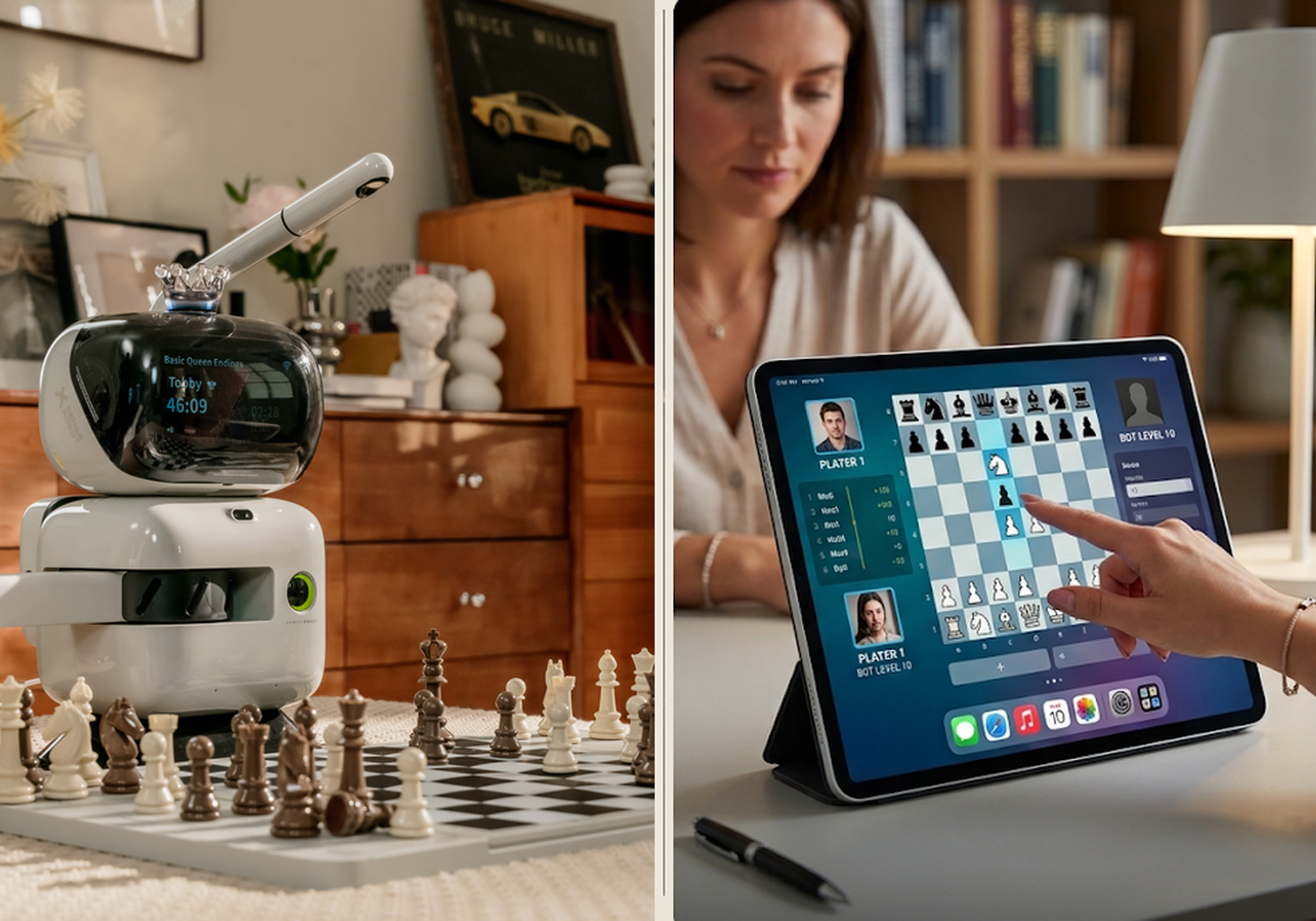
Imagine sitting across from a robotic chessboard that can see the board, recognize every piece in real time regardless of its 3D shape, calculate a winning strategy, and physically pick up a knight to place it exactly where it needs to go. This is the reality of computer vision in chess robots today.
The core question is simple but the engineering is complex: How do modern chess robots use computer vision to see, recognize, and physically interact with chess pieces on a board in real time?
This article breaks down the three layers that make autonomous chess robots work: vision perception, robotic action, and AI decision-making.
How Computer Vision Detects and Recognizes Chess Pieces
Answer first: Modern robotic chess board systems bypass older 2D detection methods, using advanced architectures like the Occupancy Network to identify 3D chess pieces with 99.9% accuracy.
1. 3D Piece Recognition and the Occupancy Network
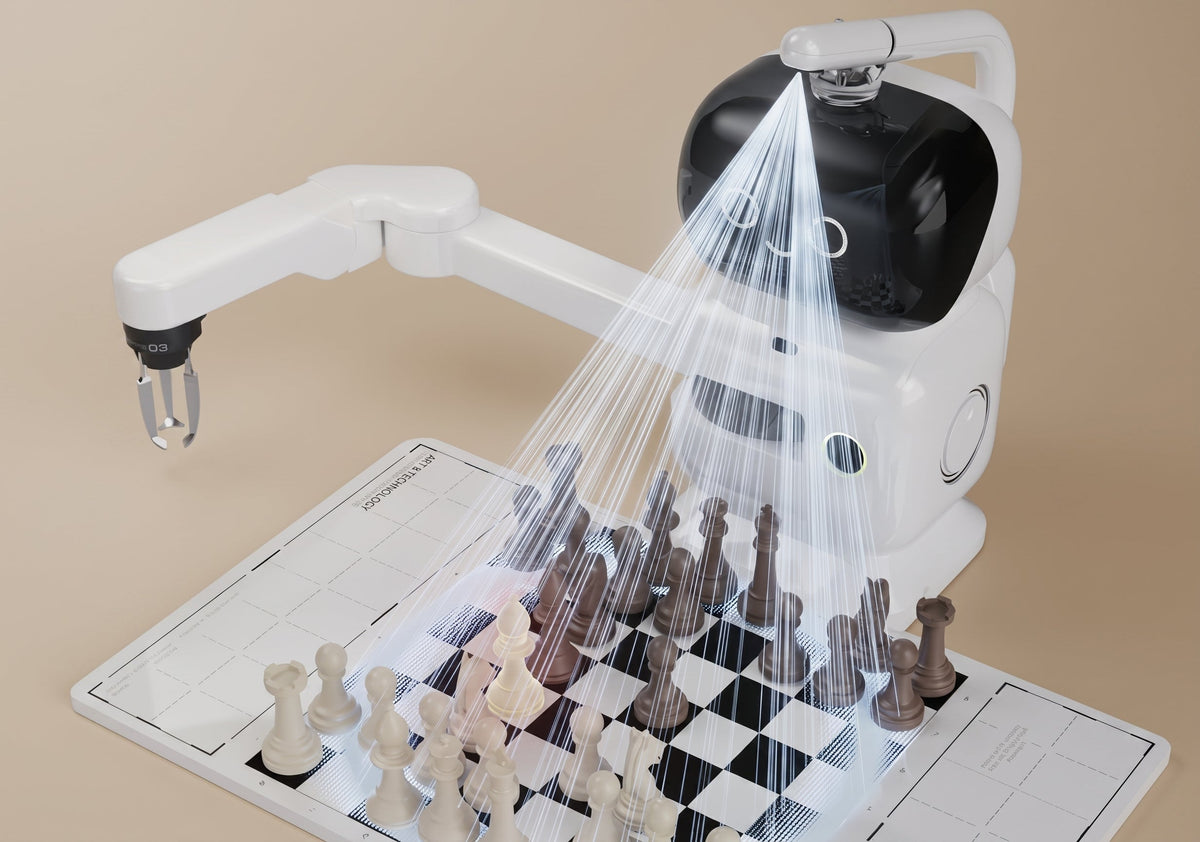
The backbone of a premium chess robot vision system is real-time 3D piece recognition. Commercial leaders have evolved past standard single-pass image processing. SenseRobot, for instance, utilizes a robust "Sense Vision + Occupancy Network". This allows the system to accurately detect every piece in real time, treating them as 3D objects rather than flat pixels, which guarantees a 99.9% AI vision accuracy.
2. Handling Real-World Conditions
A chess robot must handle variable household environments:
• Shadows: Cloud cover or room lighting changes throughout the day.
• Occlusion: A player's hand covering pieces during a move.
• Reflections: Glossy pieces creating misleading highlights.
By relying on an Occupancy Network rather than simple top-down 2D mapping, the system "sees the game as you do," processing depth and volume to maintain flawless recognition even when lighting conditions change drastically.
3. Edge Cases and Error Handling
If a player accidentally knocks over a piece, the vision system catches it. The continuous visual feedback loop tracks anomalies and halts movement until the board is corrected, preventing illegal moves or dangerous robotic motions.
From Vision to Action: Precision Hand-Eye Coordination
Answer first: Computer vision creates a continuous hand-eye coordination loop—the system translates visual input into precise action, executing moves with sub-millimeter precision through an aerospace-grade robotic arm.
4. The Hand-Eye Coordination Loop
The magic of a chess robot is its continuous feedback cycle:
1. SEE: The Occupancy Network captures the current 3D board state.
2. PLAN: The AI calculates the best move.
3. MOVE: The system translates visual input into motor control to pick up and place the piece.
4. VERIFY: The vision system confirms execution.
5. Sub-Millimeter Precision and Safety
Translating visual data into physical movement requires exceptional hardware. SenseRobot utilizes an aerospace-precision robotic arm that guarantees every pick-up operates with <1mm accuracy.
Picking up a chess piece sounds simple, but it is a classic robotics challenge. Modern models prioritize absolute safety: SenseRobot features over 30 built-in sensors. Its dexterous, three-fingered gripper applies pressure so precisely that it is gentle enough to pick up a fragile quail egg without crushing it.

The Intelligence Behind the Vision: AI and Strategy
Answer first: While vision provides perception, custom-built AI engines provide the intelligence. Modern systems utilize AI designed specifically to replicate human play styles, offering granular difficulty adjustments and comprehensive training suites.
6. Custom AI Engines vs. Stockfish
Many digital apps rely on standard open-source engines that maximize raw calculating strength. Premium physical robots use custom-built AI designed to learn and play like a human. This makes the engine a vastly superior training partner for casual home games and structured learning.
7. Adaptive Difficulty
The AI scales perfectly to the user's growing skills. The system offers 25 built-in difficulty levels ranging from Elo 200 to 2900. For grandmaster-level preparation, a dedicated "Apex Duel" mode unleashes the engine's full capacity at Elo 3200, surpassing human limits.
8. Comprehensive Training Systems
A top-tier sense robot chess unit functions as a complete, screen-free academy. Features include:
• Interactive Exercises: Over 1,600 curated chess drills.
• Endgame Challenges: 145 curated classic endgame modules.
• Classic Game Review: 100 legendary masterpiece games for skill development.
• Online Integration: Seamless real-time matchmaking via Lichess.org,
allowing the robotic arm to physically play out your remote opponent's moves. Additionally, the SenseRobot Chess Mini supports ChessConnect for direct integration with Chess.com, a feature that will also be rolled out to the standard SenseRobot Chess model via a future update.
Frequently Asked Questions
1. How accurate is computer vision in modern chess robots?
Commercial systems like SenseRobot feature high-precision 3D vision systems (Sense Vision + Occupancy Network) that accurately detect pieces in real time, achieving a recognition rate of 99.9%.
2. How does the AI differ from standard chess engines?
Instead of focusing solely on maximum computational strength, premium chess robots use custom-built AI modeled on hundreds of thousands of human players. This provides a realistic, human-like play style with 25 distinct difficulty levels (Elo 200–2900).
3. Can the robotic arm damage the chess pieces or hurt children?
No. Safety is never compromised. The robotic arm features over 30 built-in safety sensors and a precision gripper that is gentle enough to handle a quail egg without breaking it.
4. Are these robotic systems useful for beginners?
Absolutely. The technology is tailored to grow with players. With introductory courses, 1,600+ interactive exercises, and beginner-friendly Elo 200 levels, it is designed to turn learning into an engaging adventure for all ages.