For chess enthusiasts seeking a smart training partner, deciding to
buy an AI chess robot is an exciting step toward screen-free, immersive gameplay. However, navigating the current market can feel overwhelming. With various technologies available—ranging from magnetic sensory boards with LEDs to fully automated robotic arms—how do you choose the perfect match for your skill growth and home aesthetic?
For a complete overview of the AI chess robot landscape, check out our Ultimate Guide to AI Chess Robots.
At SenseRobot, we are proud to be the creators of the world's leading AI-powered board game robot. To help you make an informed decision, we have put together this comprehensive chess robot buying guide. We will break down the core technologies, AI capabilities, and ecosystems to help you find the ultimate companion for your chess journey.
1. AI Performance and Coaching: Finding a True Mentor
For serious skill development, the most effective AI is not merely the strongest engine, but the one best packaged as an adaptable, progressive coach. While raw engine power is a baseline across the industry, the real differentiator is how that intelligence is applied to teach.
Raw Power vs. Guided Intelligence
Most smart chess boards on the market feature powerful AI engines with impressive Elo ranges. However, if you want to buy an AI chess robot that truly elevates your game, look for nuanced adjustability.
We engineered
SenseRobot to cater to everyone, from absolute beginners to world-class grandmasters. Our system features 25 built-in levels ranging from Elo 200 to 2900, alongside our elite "Apex Duel" mode that surpasses human limits at Elo 3200+. But raw strength is just the start; a great robot must know how to guide you.
Goal-Oriented Training Modules
This is where our product design philosophy truly shines. An exceptional AI chess robot should turn learning into an adventure. While some smart boards only offer basic adaptive AI or simple opening hints, the
SenseRobot ecosystem provides a comprehensive home chess academy. Our system includes:
· 1,200+ curated chess exercises tailored to specific tactical themes.
· 145 curated classic endgames for highly targeted, coach-like value in the hardest phase of the game.
· 100 legendary chess games for autoplay, allowing you to study grandmaster masterpieces right on your board.
Actionable Feedback
Post-game analysis is standard, but its depth varies. The usefulness of feedback hinges on actionable insights. Instead of just showing you the engine's top move, premium systems like SenseRobot provide detailed analysis with interactive voice conversation, ensuring you receive clear, encouraging, and professional instruction that explains the "why" behind a mistake.
2. Physical Design and Tactile Feel: The Magic of Movement
We believe kids and adults alike shouldn't just be glued to another screen. The magic of physical, tactile play is the primary reason to buy an AI chess robot, and the technology moving the pieces directly impacts this immersion.
Comparing Core Mechanisms
When browsing a chess robot buying guide, you will encounter three main types of physical mechanisms:
· Sensory Indicator Boards: These boards use hidden arrays of magnets and LED lights. The board registers your move, and then lights up to tell you where you must physically move the AI's piece for it.
· Internal Roller Boards: These feature a hidden magnetic mechanism beneath the surface that drags magnetic pieces across the squares. While automated, the pieces slide and sometimes require complex maneuvering to navigate around other pieces.
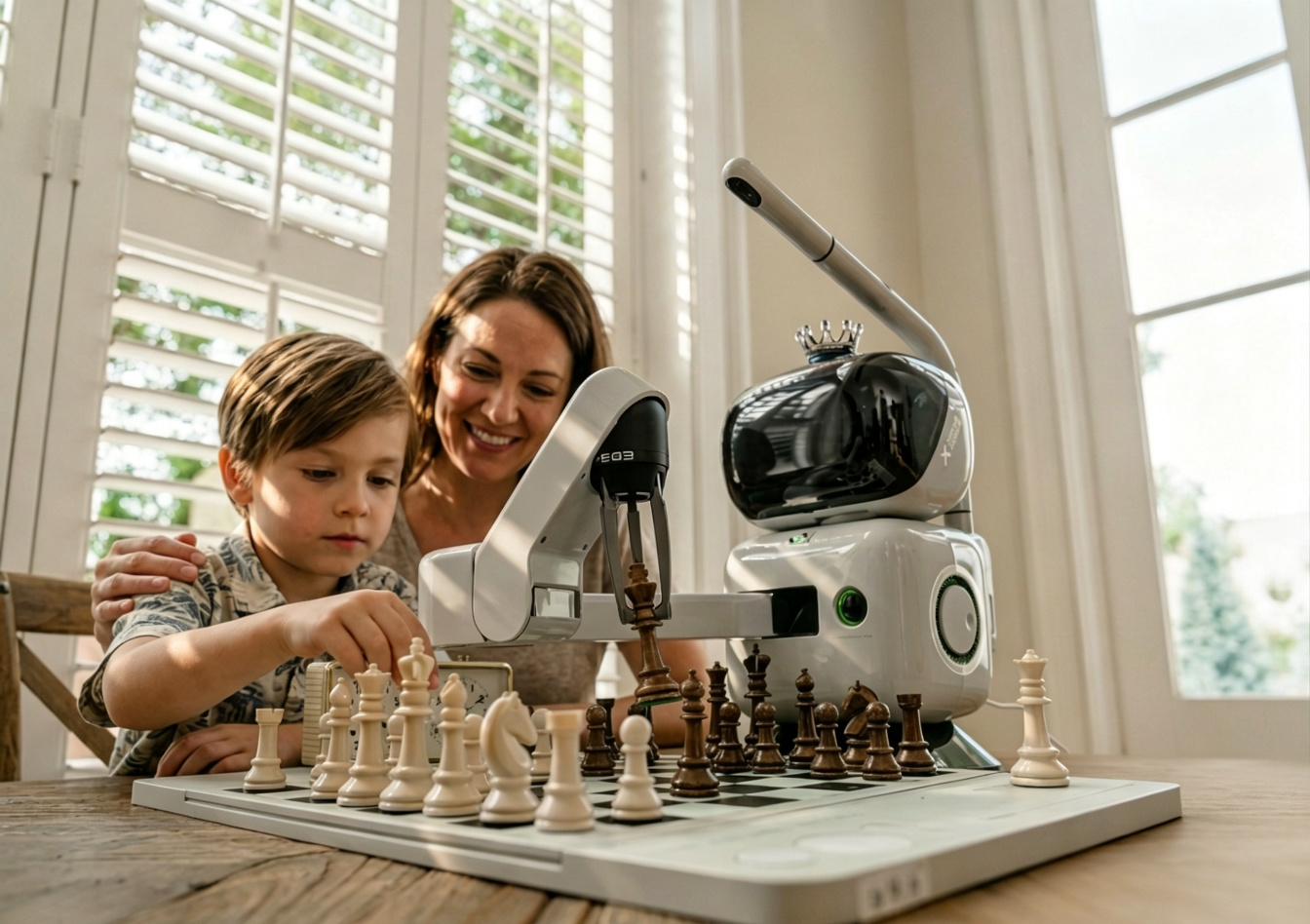
· Aerospace-Precision Robotic Arms: At SenseRobot, we employ a proprietary multi-axis robotic arm. Our arm visually recognizes and physically grasps pieces from above with less than 1mm accuracy per pick-up. This provides a breathtaking spectacle of precision, hand-eye coordination, and true automation.
Touch, Recognition, and Safety
How the board registers human moves is critical. Many magnetic systems require proprietary chipped pieces and can occasionally misread placements if pieces are not centered perfectly.
SenseRobot uses overhead computer vision powered by our Sense Vision + Occupancy Network, boasting a 99.9% AI vision accuracy. It sees the game exactly as you do, requiring no special chips. Furthermore, safety is never compromised; utilizing 30+ built-in sensors, our robotic gripper is so dexterous and gentle it can pick up a quail egg without crushing it.
3. Long-Term Value & Ecosystem: Expanding Your Horizons
The best hardware is elevated by its software and the community it connects you to. When evaluating a purchase, consider the long-term digital ecosystem.
Global Connectivity
Seamless connectivity is vital to bridging the gap between physical and digital play. We are proud to feature robust, native Lichess.org and chess.com integration on the SenseRobot. Through our app, you can easily bind your account for human-to-human online play, allowing you to seamlessly play over-the-board matches against millions of opponents globally.
Investment Perspective
Entry-level sensory boards that require manual piece movement sit in the mid-range price tier, while fully automated models command higher prices. By innovating through 8 major design iterations, SenseRobot successfully broke the price barrier of industrial robotic arms, bringing what was once a $40,000 technology into the home for less than $1,000. Choosing SenseRobot means investing in an unparalleled robotic auto-mover experience, backed by our strategic partnership with the European Chess Union (ECU).
Conclusion
Choosing the right AI chess robot hinges on your personal chess journey. If your goal is structured, coach-like improvement paired with a technological marvel, our proprietary robotic arm, 99.9% vision accuracy, and expansive training modules present the ultimate choice. SenseRobot is designed to be more than just a smart board—it is a life companion designed to inspire learning and connect hearts.
Visit our official website to discover how we turn technology into warmth and take the next step in elevating your game.
FAQs: Quick Chess Robot Buying Guide
Q1: Can AI chess robots connect to major online platforms like Lichess?
Yes, online connectivity is a major feature across premium smart boards. SenseRobot features built-in integration with Lichess.org and chess.com , turning your physical robot into a gateway for remote global play against human opponents worldwide.
Q2: What should complete beginners versus advanced players look for?
Beginners should look for structured lessons and guided feedback, while advanced players need highly adjustable, powerful AI engines (Elo 2500+). SenseRobot stands out by providing personalized coaching for learners at all stages, offering 25 challenge levels (Elo 200-2900), the Apex Duel mode (Elo 3200), and a massive library of 1,200+ curated exercises.
Q3: How do these robots handle special moves like castling or en passant?
All modern AI boards understand the rules of special moves. The physical execution, however, differs by the board's technology. True robotic arms, like SenseRobot, perform the multi-piece move of castling automatically from above. On LED magnetic sensor boards, the board's lights will indicate the move, and you must physically move your king and rook yourself.
Q4: What is the typical setup time and learning curve?
Setup is generally quick (under 10 minutes): simply unbox, plug in, and connect to the app via Wi-Fi/Bluetooth. Fast device pairing allows you to jump right into the action. The physical interaction is incredibly intuitive because you just play chess exactly as you normally would.