Quick Summary
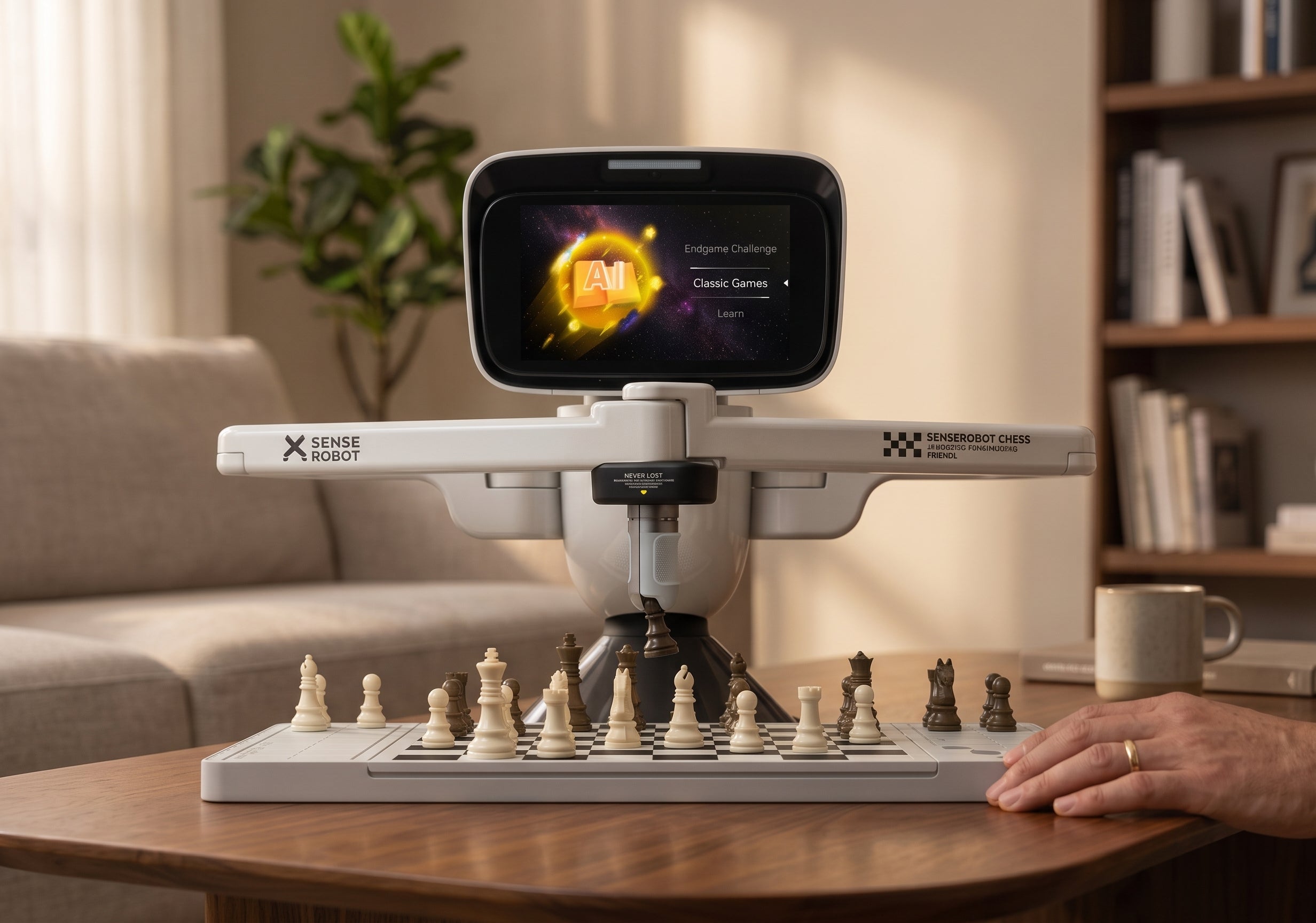
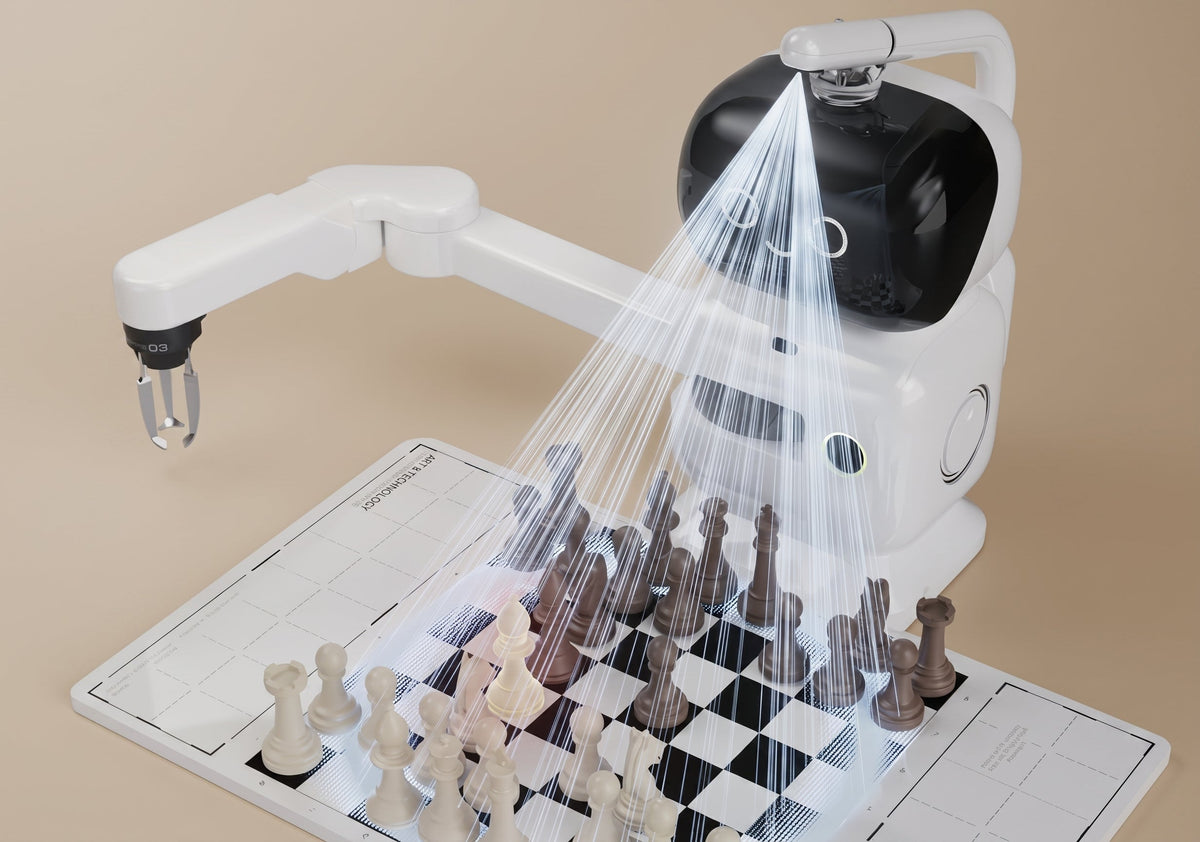
· Physical chess robots (like SenseRobot Chess) offer tactile, screen-free learning that engages spatial reasoning, requiring some upfront investment.
· Online chess apps (like Lichess and Chess.com) provide unlimited opponents, massive databases, and with a low entry cost.
· Custom AI vs. Open-Source: While apps rely on standard engines like Stockfish, SenseRobot utilizes a proprietary SenseTime AI engine to translate intelligence into physical motion. The core difference is tactile, over-the-board execution versus data-driven screen time.
· Kinesthetic learners and families benefit heavily from the physical presence of robots.
· Searches for "self moving chessboard" surged 32,000% to 118,000+ monthly in early 2026, marking a massive shift toward hardware-based chess training.
Physical Experience & Engagement
A physical, self-moving chessboard offers a fundamentally deeper cognitive experience than a screen-based app. Moving real magnetic pieces activates different neural pathways rather than tapping a 2D glass screen. Kinesthetic learning—the act of physically grasping, lifting, and placing pieces—improves board visualization and calculation depth. Feeling the weight of a rook sliding across the board maps the position vividly in the brain.
With children spending 5+ hours daily on screens for school and entertainment, a robotic chessboard offers a vital digital detox. There is no blue light, no notifications, and no competing apps. The mechanical arm moving pieces across the board creates a profound psychological immersion, mimicking a live opponent and increasing the emotional weight of each move.
A physical board also naturally invites spectators. Parents can sit beside their child, discuss moves, and share the experience, turning solitary screen time into family engagement.
AI Engine & Training Depth
Most high-end robots run Stockfish 16+ or custom engines built on top of it, mirroring the exact analytical power found in premium chess apps.
Advanced systems like SenseRobot Chess feature 25 AI levels ranging from Elo 200 to 3200, dynamically adjusting to a player's skill level. This eliminates the steep frustration curve common on apps. Walking around a three-dimensional board and analyzing angles aids pattern recognition far more effectively than scrolling through a 2D move list.
| Feature |
Robotic Chess Board |
Chess Apps |
| AI Engine |
Stockfish 16+ / Custom |
Stockfish 16+ |
| Adaptive Difficulty |
✅ Yes (25 granular levels) |
⚠️ Limited |
| Physical Replay |
✅ Move-by-move on board |
❌ 2D/3D screen only |
| Offline Training |
✅ Full capability |
❌ Requires internet |
| Structured Lessons |
✅ 1,600+ curated exercises |
✅ Available (Premium) |
Cost vs. Lifetime Value
A premium automatic chessboard is a physical asset with long-term utility, whereas app subscriptions are recurring expenses with zero resale value.
· Premium App Subscriptions: ~$119.88/year → ~$1,199 over 10 years
· Entry-Level Electronic Boards (LED indicators only, no robotic arm): ~$199
· SenseRobot Chess (Robotic arm, 25 levels, 1,600+excersises): ~$999
| Player Type |
Better Value |
Core Reason |
| Beginners & Children |
Robot |
Distraction-free, tactile, screen-free learning |
| Casual Players |
App |
Free to play, huge variety of human opponents |
| Advanced/Club Players |
App |
Deeper databases, 24/7 global matchmaking |
| Families |
Robot |
Shared activity, durable hardware, reduces screen time |
Frequently Asked Questions
1. Can an AI chess robot make me a better player faster than an app?
Tactile learners who benefit from physical interaction and structured, distraction-free training improve faster with a robot. Data-driven learners who enjoy analyzing thousands of games and playing a global pool of opponents progress faster with apps.
2. Which is better for kids: a robotic chessboard or a chess app?
Robots are vastly superior for children, especially ages 5–12. They eliminate screen time, increase engagement through physical interaction, and offer structured lesson plans. Apps are cheaper but inevitably lead to digital distraction.
3. Do AI chess robots support online play against other humans?
Yes! At SenseRobot, we bring online matchmaking directly to your physical board. Both SenseRobot Chess and SenseRobot Chess Mini support real-time play via Lichess.org and feature our remote Friend Challenges mode, where two boards physically mirror each other's moves across the globe.
Additionally, the SenseRobot Chess Mini supports ChessConnect to link directly with Chess.com, delivering a truly immersive, screen-free online chess experience.
4. Will a robotic chessboard become obsolete as AI improves?
Most modern robots support over-the-air (OTA) firmware updates. The physical hardware—magnetic sensors, robotic arms, LED grids—is built to last, while the internal AI engine can be continually updated, making these boards a highly durable long-term investment.
If you are weighing an AI chess robot vs. online chess apps to level up your skills in 2026, automatic self-moving chess boards deliver unbeatable tactile, distraction-free learning for families and kinesthetic learners.