
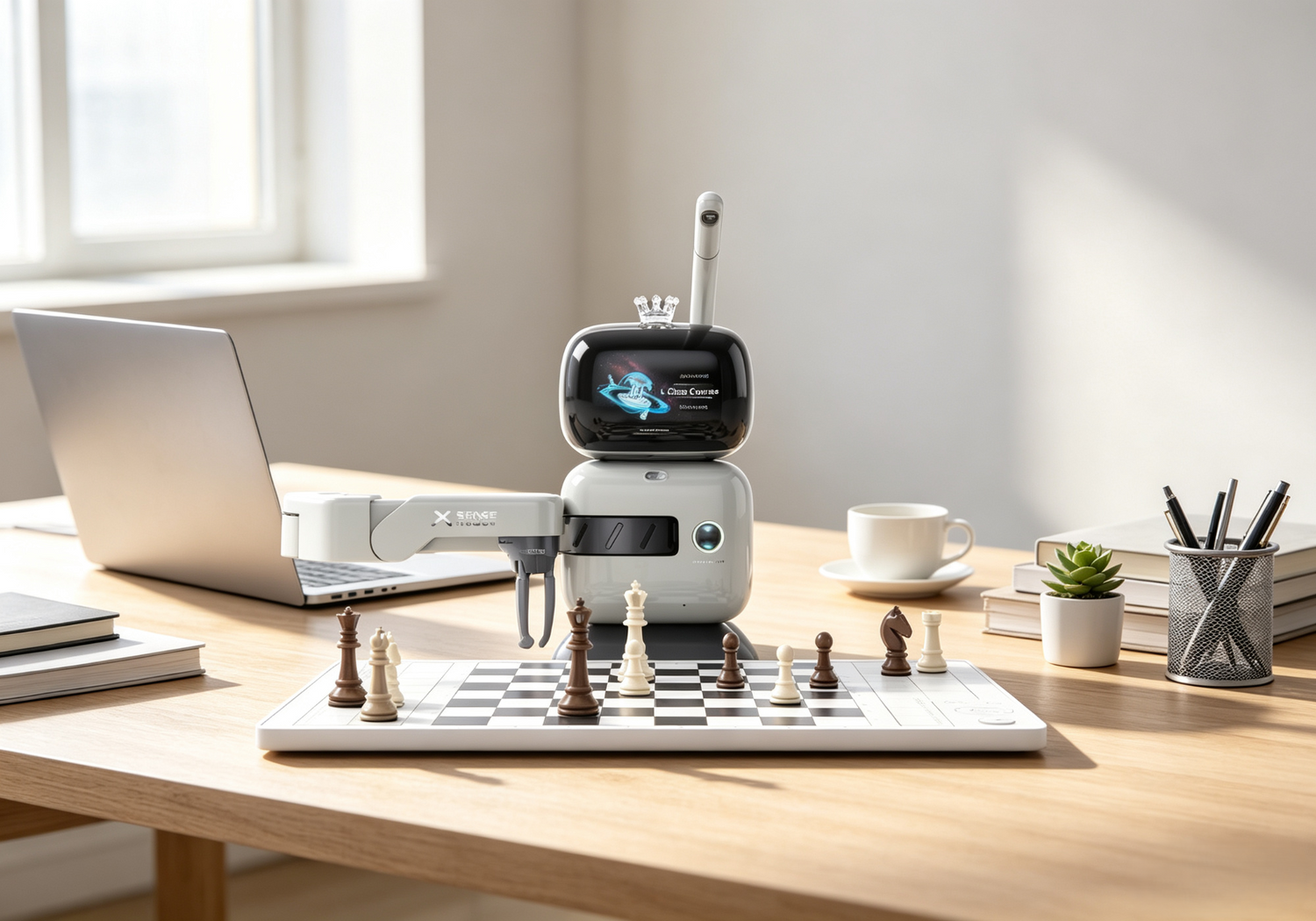
Can You Play Online Chess on a Physical Robotic Chess Board with SenseRobot? Everything You Need to Know

Can You Play Online Chess on a Physical Robotic Chess Board with SenseRobot? Everything You Need to Know

Quick Summary

· Seamless Integration: As a premium robotic chess board, SenseRobot integrates perfectly with Lichess.org to let you play online chess on a real, physical board.
· Precision Hardware: The system uses an aerospace-precision robotic arm to detect, pick up, and place pieces automatically.
· Two-Way Sync: A companion app syncs the automated chess board to Lichess; when your opponent moves online, the robot physically mirrors it in real time.
· Friend Match: This mode lets two users play remotely, with both boards physically replicating every move.
· All-in-One Training: With 25 AI levels, voice coaching, and 1,200+ puzzles, it's a sense chess robot designed for both serious competitors and families.

How It Connects Online Chess to a Physical Board

This moving chess board bridges the digital and physical chess worlds without requiring you to stare at a screen. When your online opponent makes a move, the robot picks up the corresponding piece and places it on the correct square.

The Hardware Behind the Magic

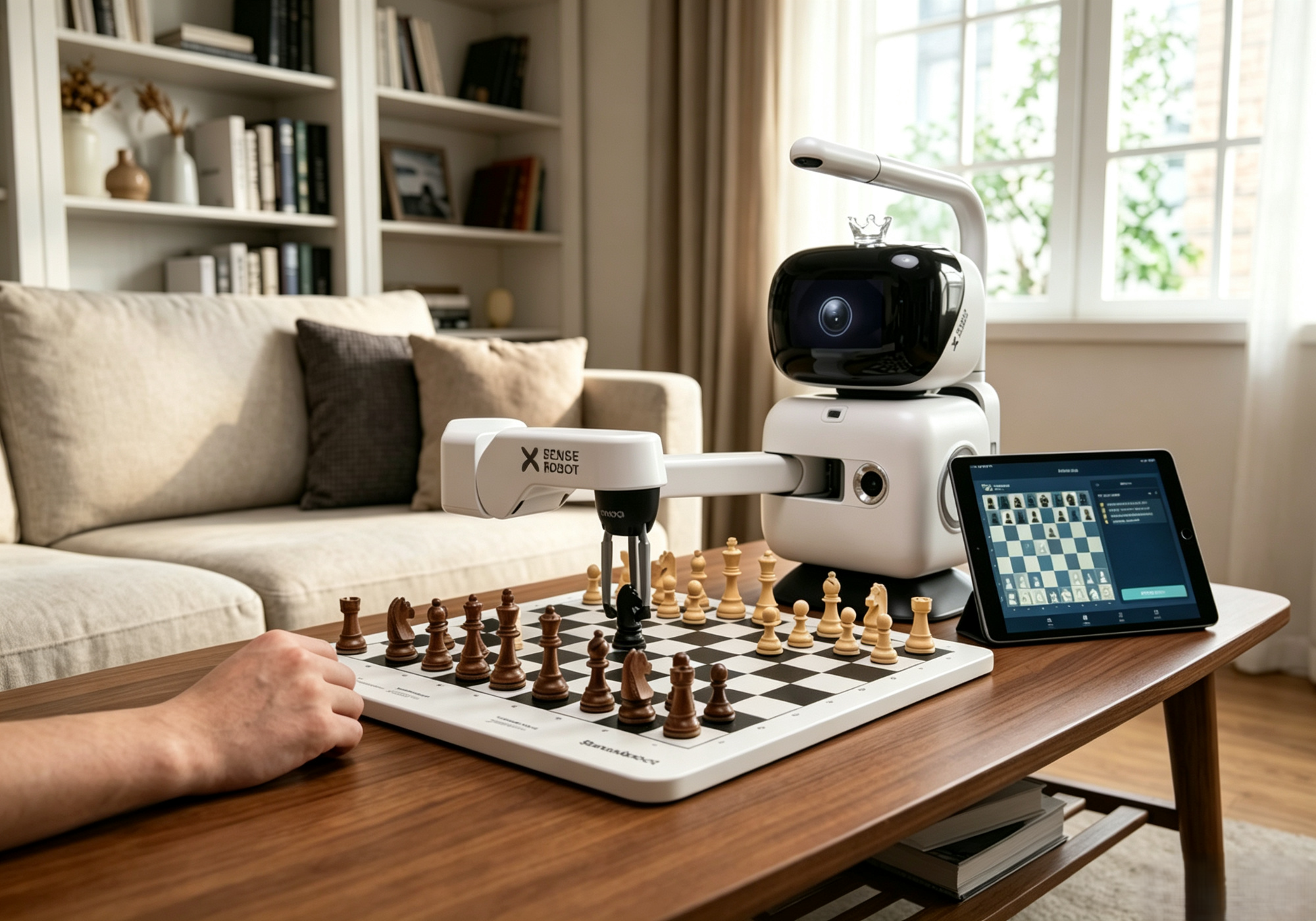
At the core of the sense robot chess experience is a camera vision system mounted above the board. The camera continuously scan the board state. When your online opponent plays a move, the proprietary robotic arm swings into action. It precisely picks up the correct piece, moves it to the target square, and releases it with a natural, human-like motion. You are looking at a real automatic chess board where pieces move entirely on their own.

Setting Up for Online Play

Getting connected takes just minutes:

1. Download the companion app and connect the board to Wi-Fi.
2. Link your Lichess.org account through the app.
3. Select "Online Chess" mode and start matchmaking.

Once paired, every move you make physically is transmitted to Lichess, and every move your online opponent makes triggers the robotic arm to replicate it on your board.

Online Features Beyond Standard Play

Beyond standard matchmaking, this self moving chessboard offers several features that make it a comprehensive training hub.

Lichess Integration: The Primary Gateway

SenseRobot partners with Lichess.org, a free, open-source chess platform with millions of active users worldwide. This provides a massive player pool and robust matchmaking at every skill level without any subscription fees.

Friend Match: Two Boards, One Game

If you and a friend both own a self moving chessboard, you can play each other remotely. You make a move on your board, and your friend's robotic arm mirrors that exact move on their board across the world. It transforms online chess into a shared physical experience.

PGN Export and Multi-User Profiles

Every game you play can be exported as a PGN file, allowing you to analyze your matches on your preferred analysis platforms or share them with a coach. Furthermore, the system supports multi-profile functionality, meaning different family members can link their own accounts and track their individual progress.

Offline AI as a Complement

The board offers 25 AI difficulty levels spanning Elo 200 to 2900, plus an "Apex Duel" mode of Elo 3200 for advanced players. Combined with 1,200+ built-in puzzles, it functions as an elite training tool even when disconnected from the internet.

Robotic Arm vs. Standard Smart Boards

The key differentiator of SenseRobot is true physical automation. Most standard electronic chess boards rely purely on magnetic sensors and LED lights embedded under the squares. When an opponent's move is received, these boards light up, and you must manually move your opponent's piece yourself. Additionally, many of these standard boards rely entirely on a paired smartphone app to process the game.
The SenseRobot model operates completely independently, powered by a built-in engine navigated via a vibrant 5.5-inch screen. A robotic arm reaches out, picks up the piece, and places it on the correct square. You never have to touch your opponent's pieces or drain your smartphone battery. This creates a highly immersive "sense of occasion"—a feeling that you are engaged in a real over-the-board tournament game.
Playing on a physical board also protects eyesight by drastically reducing screen fatigue. Cognitive science shows that physical manipulation and tactile engagement improve spatial reasoning and pattern recognition far better than screen-only observation.

Frequently Asked Questions

1.Can I play on other online platforms besides Lichess?
Currently, SenseRobot officially integrates directly with Lichess.org to ensure the most stable and seamless robotic experience. Additionally, the SenseRobot Chess Mini can connect to Chess.com via ChessConnect, and this feature will also be rolled out to the standard SenseRobot Chess model in the future!


2.Does the robotic arm move fast enough for blitz chess?
The arm is calibrated for a deliberate, natural pace—ideal for classical and rapid time controls. Fast-paced rapid chess and chess clock support are already available on the SenseRobot Chess Mini, and this feature is coming soon to SenseRobot Chess via an upcoming software update. 


3.Do I need a smartphone to use it for online play?
The companion app is required for initial setup, Wi-Fi configuration, and account linking. However, during gameplay, you do not need to stare at your phone. The board's built-in 5.5-inch screen and voice guidance handle alerts and navigation seamlessly.


4.Can two boards play each other remotely?
Yes! The Friend Match feature allows users to play each other remotely, with both boards physically replicating the moves in real time.


5.Is it suitable for children learning chess?
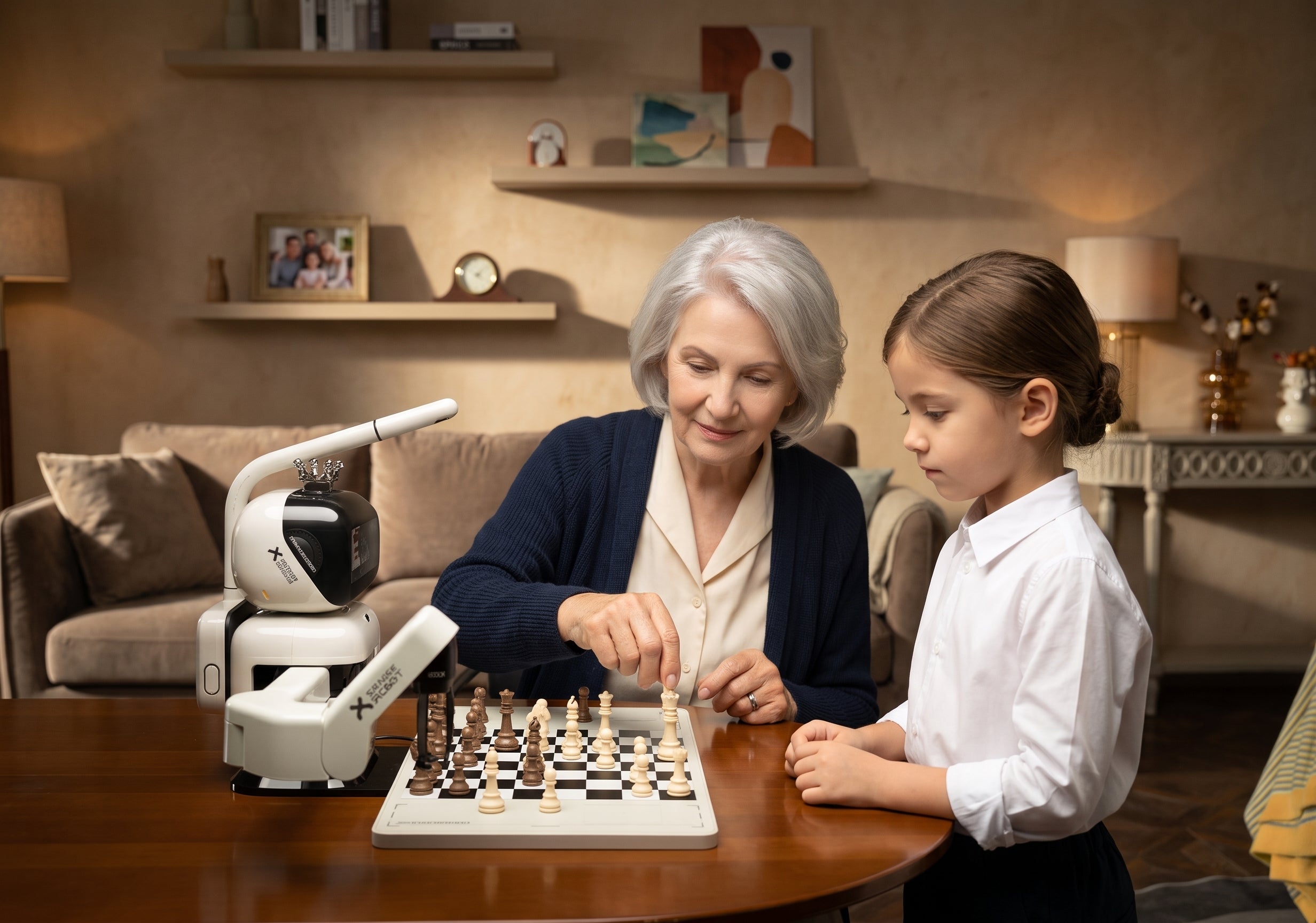
Absolutely. With 25 AI levels, voice coaching, and physical play that eliminates screen fatigue, this electronic chess board is designed thoughtfully for kids and families to learn safely and effectively.
阅读下一篇

How SenseRobot's Robotic Arm Actually Works: The Engineering Behind the World's Smartest Chess Robot
Are AI Robotic Chess Boards the Future of Chess Training?